Spring Training Voyage


I’m back from Spring Training, and it’s all too soon. I was having a lot of fun poking around Port St. Lucie and Digital Domain Park.  I took 500 pictures over three days, and captured images of many of our favorite, and less favorite, Mets players.  I watched road, home, and minor league games and saw players from the low minors to the cream of the crop doing all different kinds of baseball drills.  I met Amber Coyle, and Matthew Rose of NL East Chatter and The Real Dirty Mets Blog.

First, check out these two posts I put up last week involving Mets eating dinner and pictures from the St. Patrick’s Day game against the Red Sox and then click below to view more pictures.

Mets Players, and Owners, Eat at Duffy’s

After returning from Fort Myers to Port St. Lucie on Thursday, we went to Duffy’s for dinner.   One of the waiters there noticed our Mets stuff and mentioned that all the Wilpons were in earlier eating dinner.  He said they didn’t tip as well as in years past, but it was still a lot of money.


Halfway through our meal my wife noticed five athletic looking guys walk past us to a table in the back.  I recognized Kirk Nieuwenhuis, and I suspect the others were also just returned from the Red Sox game and were getting a late dinner.   I think Lucas Duda and Russ Adams were there.

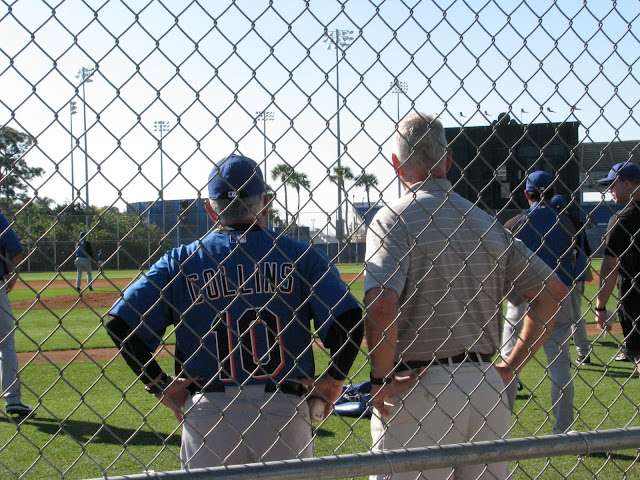
Collins and Alderson Releasing Castillo (pics!)

This picture was taken around 10am on Friday morning.  Luis Castillo was still in a Mets uniform and on the practice fields.  I wonder what they were talking about..


Sandy Alderson and Terry Collins discussing something


Shortly after this Twitter was all abuzz about Luis Castillo being released.

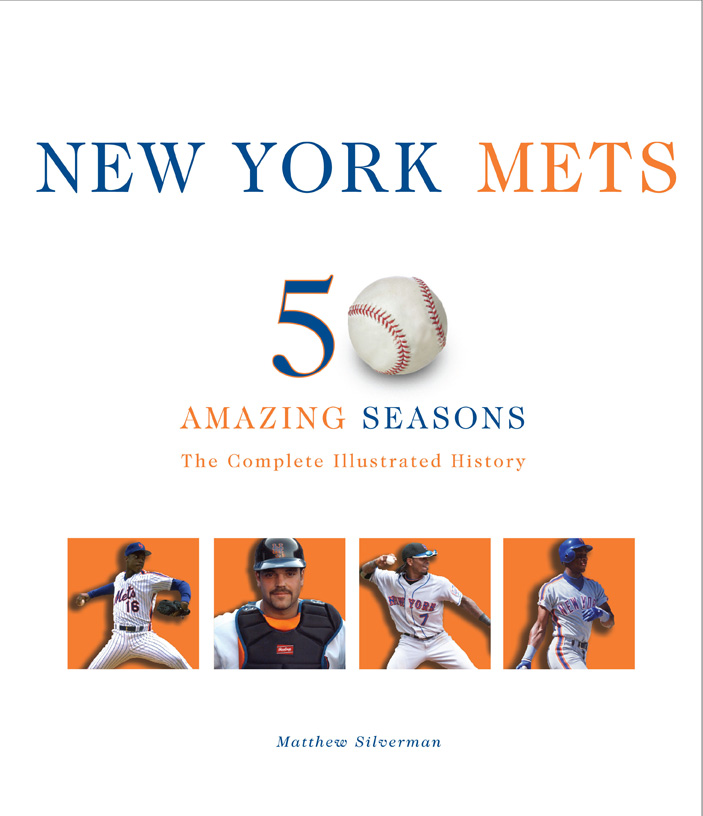
New York Mets: The Complete Illustrated History

Matthew Silverman wrote a terrific book called New York Mets: The Complete Illustrated History.  It’s a decade by decade play by play of the New York Mets and their history, with all sorts of wonderful illustrations.  It’s also got Mr. Met on the spine, which is something my bookcase sorely lacks.  The book details all 50 seasons as well as the years leading up to them.  It starts from the Giants and the Dodgers and goes all the way through to the firing of Jerry Manuel and Omar Minaya.  It’s so current I almost expect to find a new page when I open it again.


The book is a real A to Z type guide of everything you could ever want to know about the Mets history.  From the common knowledge of Tom Seaver and Bobby Valentine to the more obscure trivia like alternative names considered for the team and obscure merchandise and slogans.  It even has a stats section with the list of all the All-Time Mets records.


The pictures are great as well.  You’ve got all the greats obviously, and other nuggets like Tom Seaver in 1967 Spring Training, and a shot of the Mets playing at the Polo Grounds.  There are aerial views of Shea Stadium and a button that reads “I was a believer but now we’ve lost Seaver.”  Silverman doesn’t sugar coat it either: There’s a detailed section on Anthony Young’s 27-game losing streak,  a picture of Mike Piazza on the ground after getting beaned by Roger Clemens and a picture of the pitch Tom Seaver threw to Joe Wallis that spoiled his no-hitter.


It ‘s rare to find a book that you can be just as entertained reading a random section of it as you can just by randomly flipping through and looking pictures, but this book does just that.  I’m definitely going to delve into it further once I return from Spring Training.  I recommend you do the same.

Mets New Fundraising Plan: Sell The Blogs

Much has been made of the Mets current financial woes, but I’ve recently learned of a new plan they have to raise some money.  Starting on Opening Day the Mets are going to start a new concession booth at Citi Field out in the center field concourse.  This new stand will sell new and used Mets blogs at a reasonable price.


First up is the esteemed blog, Read the Apple.  In what is perhaps a misinterpreted understanding of common adages, the Mets believe if they sell an Apple a day, it’ll keep the doctors away.  Health is a key component to a successful Mets season, and they’re doing everything they can.

Eat The Apple


All articles featuring The Apple are fictitious. No Mets were harmed in the writing of this story.  Optimistic Mets Fan would like to thank The Apple, and the Academy, for awarding us a prestigious Fonzie award.

Mr. Mets Landing and Pyrotechnics

The Mets announced this weekend that they will have Pyrotechnics night again this year.  They also announced that they renamed the last two sections of the Left Field Landing seats to Mr. Mets Landing, and will be discounting them.

Mr. Met’s Landing is a new, specially priced area of the ballpark.

Sections 338 and 339 in Citi Field’s Left Field Landing are priced at $10 for kids 12 and under and $20 for adults ($20 and $30 respectively for four Marquee game dates)

Mr. Met will visit both sections during every home Mets game.

I sat in the future Mr. Mets Landing section late last year.  That post has some pictures, and I’ll share some here as well.  What I was most shocked about was how much I actually enjoyed the seats.  I’d previously been under the assumption that the Landing may have been the worse section in the ballpark due to the overhang above you making it tough to see the scoreboard, and the Landing itself blocking you from seeing the left fielder.  This is still probably the case if you’re beyond rows 5-6 or so, but otherwise I think Mr. Mets Landing will end up being pretty popular.  You get a view of the game from nearly dead center, which is similar to the view you get on the TV cameras at home.  You get the view from behind the pitcher as he throws his pitch, as opposed to watching from behind the batter.  You’re more a part of the team on the field than the team at the plate, and I think this is one of the best things Citi Field has going for it that we didn’t get to experience at Shea Stadium.

I was at the inaugural Pyrotechnics night last year, and I had a good time.  I was initially skeptical; Fireworks night had been my favorite promotion growing up and I was sad to see it go.  I turned out to be pleasantly surprised; given the name change I did not expect fireworks, but the Pyrotechnic display that we did get was pretty good.  Not that there weren’t issues with it, but it was new and exciting and I had fun.  I’m planning to go again this year.

Practice post on my phone

image

Practice post on my phone.  Seeing how easy it is to post from my phone for my Spring Training trip next week.  I’ll upload my pictures mostly to Twitter so your should follow me there. Also experimenting with my Tumblr.

2011 MLB Over-Unders: My Picks

Every year I make a couple of prop bets on baseball before the season starts.  I just like to put my money where my mouth is and this year is no different.  So here are a couple of MLB Over/Under bets I made on Bodog. The player props aren’t out yet, so this is just the team. 

Tampa Bay Rays – Over 84½

I know they lost some guys, but they’ve also picked some up.  They can still pitch, and I don’t expect them to drop off as much as this.

Philadelphia Phillies – Under 97

I would like to point out that they lost Jason Werth in an offense that at times last year was non-existent and their best hitters are both a year older, and hurting.  Chase Utley still hasn’t played a game this spring.  Yes, they’ve got quite the cast of starting pitchers, but Hamels is up one year and down the next, Oswalt has struggled with back issues frequently and neither he nor Cliff Lee had absolutely amazing numbers last year.  The offense also has to score for them to win.  Halladay is still amazing, but 97 seems high.

New York Mets – Over 77

 Unless you’re predicting injuries and guys having bad years, it’s hard to imagine the Mets winning this few games. They won more last year, and I think they’re a better team, perhaps the best offense in the National League.   They’ve got a manager, they’ve got Reyes healthy.  They won’t be playing Jeff Francoeur even if Beltran can’t play 140.  I expect 2B, 1B and catcher all to give us more production, and it’d be hard for Jason Bay not to have a bounce back year.  I believe in Dickey and Pelfrey and I think Niese gets better in his second year. 

Baltimore Orioles – Under 76½

76.5? in the AL East? For a team that won 66 last season? They’ve made some additions this offseason, but I can’t see them reaching 77 wins.  This probably goes along with my Rays guess.  If I think they’re going to win more games, some of those will be against the Orioles. 

Atlanta Braves – Under 87½

The Braves reached 91 games last season, so this one’s tough.  I believe they overperformed a bit and I don’t have faith in their pitching depth.  They also no longer have Bobby Cox, for whatever that’s worth, and Billy Wagner had a great year for them and retired.  I could see them winning 86-87, but I think they fall just under.

New York Mets 35/1 to win the World Series

Obviously a long shot, but I make this bet every year.  Personally I think they have a better than 1/35% change

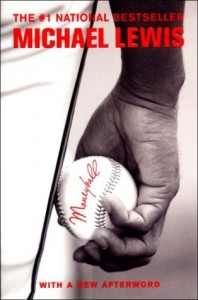
Moneyball Review

Moneyball was a good read, but it’s not quite the guide to the Mets new front office that many seem to think it is. Sandy Alderson has repeatedly stated that he wouldn’t have taken the job if he was forced to operate the way the Oakland A’s did in the book. Moneyball gets mixed up with Sabermetrics, but it’s only really one story about one team and not really about the statistics we associate with Sabermetrics these days.


Moneyball was about the Oakland Athletics, specifically the 2002 team, Billy Beane, and finding players that most other franchises under-valued. It was driven not by some sudden thirst for more knowledge or to understand the game better, but from a desperate need to try to compete with the vastly expanding budgets of baseball’s richest teams. Now the secret is out of the box in regards to the particular secrets Beane and the A’s discovered. Everyone is aware of the value of getting on base and not making out. J.P. Ricciardi, Paul DePodesta and Sandy Alderson are still great thinkers and I have a lot of faith in their ability to lead the Mets but they’re not imparting some secret Moneyball techniques to do so; they’re just smart.


There was other interesting things in the book. One such thing was the idea that you can’t determine a prospects success by saying “He looks like a baseball player.” There is statistical evidence to look at; things like getting on base, or hitting for power. Many scouts still relied on a gut feeling about how a guy looked over the actual data, dismissing it as amateur stuff and having little relevance to the major leagues.


“A young player is not what he looks like, or what me might become, but what he has done.”


One chapter talks about Billy Beane’s failed attempt to become a baseball star. He was a first round draft pick and one of those highly touted prospects. Mostly because he was talented and looked like a ballplayer. Beane couldn’t handle the failure inherent in baseball, couldn’t cope with the mental part of game and eventually ended up in the front office. The signs were there for scouts to see, but they ignored them for the pretty package.


Another example is Chad Bradford. A relief pitcher who threw sidearm was unconventional, and he didn’t seem like a big league player. Despite positive results he didn’t get much appreciation from his teams until the Oakland A’s traded for him.


Another thing to note is that just because someone played the game doesn’t make them an expert on it and the naked eye is a poor tool to evaluate baseball players. What we observe is often limited and we rarely see the whole picture. A talented shortstop adjusts and positions himself to make a hard hit ball into an easy pick up and throw to first, whereas a less talented one may have to race to the ball and making a leaping throw to get the runner. The good shortstop did it easily, and it gets overlooked because no one was paying attention to him until after the ball was hit. This is what’s truly meant by the phrase “He made it look easy.”


The difference between a .300 hitter and a .275 hitter is one hit every two weeks. Even if you watched every pitch, without looking it up you wouldn’t be able to tell that Victor Martinez had one more hit every two weeks than Ryan Theriot.


There is a lot of Bill James and the advance of really thinking about baseball beyond the traditional numbers; The real birth of all the advanced statistics that are recorded and calculated nowadays. Moneyball discusses the roots of these companies that tabulate stats, and the intelligent people that came up with some of the almost common place statistics we use today.


Other sections of the book discuss scouting further. Later on the construction of the roster comes into play, and how Billy Beane is going to replace Jason Giambi’s production in the lineup now that he’s gone. There’s further discussions about specific players on the team and why they’re brought in and what they’re looking at. David Justice was an aging slugger, but the A’s expected his OBP to be something that he wouldn’t lose with age. They didn’t care that he’d hit less home runs, they just wanted him to get on base. They played Scott Hatteberg at first baseball because they felt he had value to the team and they could teach him enough defense to get by. He’d had surgery on his hand and could no longer really throw as a catcher, and the Red Sox didn’t want him anymore, undervaluing his OBP and how many pitches he saw per plate appearance. Some of the book deals with Beane himself. The guy is crazy. Picture the loudest, craziest fan you know. The one that paces during tense moments and breaks things when pitchers give up home runs. That’s Billy Beane.


The book was an interesting read, but it’s still just a story. A lot of interesting philosophies are put forth, but many of them also don’t work out so well for the team. I highly recommend anyone that’s interested in baseball read the book if they haven’t already, (Hey, there’s a movie coming out too!) but it won’t give you any particular insight into the Mets front office or really to any front office. It was a long time ago in baseball years, and even Billy Beane is doing things differently.


One last observation: Much of the misconception of Moneyball is that it’s about walking and then hitting the three-run home run. This isn’t the case at all, and that particular phrase is only popular because it’s how Joe Morgan once described the book on a Sunday Night Baseball broadcast.